

One minute you’re enjoying your morning coffee while answering emails, and the next, it’s almost lunchtime, your shoulders feel tense, and your lower back is starting to ache. Sound familiar?
Working remotely offers flexibility, but it’s surprisingly easy to spend hours sitting without realizing how little you’ve moved. Fortunately, incorporating simple desk exercises into your daily routine can help ease muscle stiffness, engage underused muscles and make your working day more comfortable.
You don’t need gym equipment, workout clothes or a lengthy lunch break. Sometimes, a few minutes of intentional movement are enough to make a difference in how you feel.
What Are the Risks of Sitting All Day?
Prolonged sitting can contribute to neck tension, back discomfort, muscle stiffness and reduced mobility. A sedentary lifestyle is also associated with an increased risk of cardiovascular disease, obesity and metabolic health problems.
Even if you exercise outside working hours, breaking up long periods of sitting is a worthwhile habit. Combining regular movement breaks with stretching and strengthening exercises is a practical place to start.
10 Effective Desk Exercises to Stay Active While Working
These exercises combine gentle stretching, muscle strengthening and mobility movements. Start with comfortable repetitions, breathe naturally and avoid movements that cause pain.
1. Gentle Neck Stretches
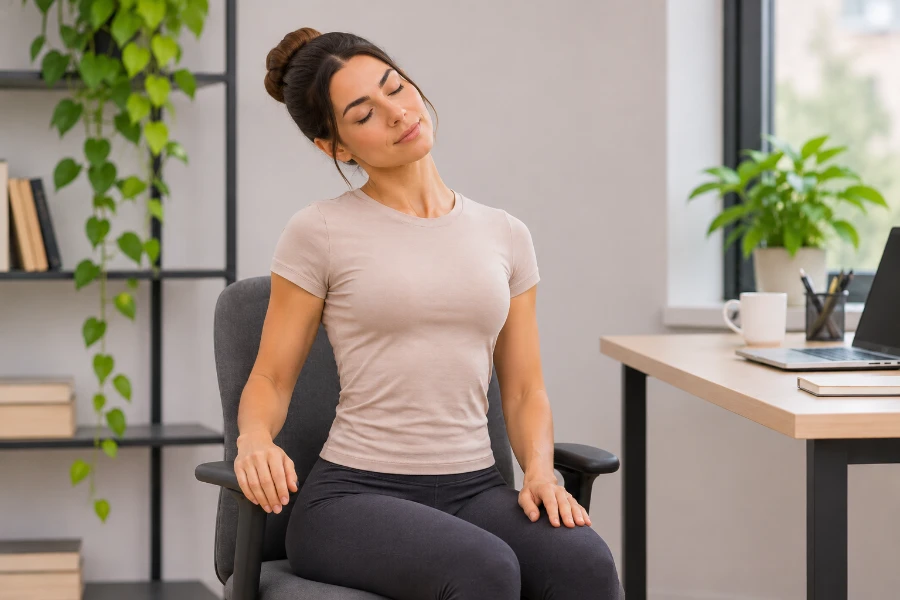
If you’re searching for neck exercises at your desk to ease tension, start with this gentle movement.
Sit upright and slowly tilt your head toward your right shoulder. Hold for 15–20 seconds before switching sides. Keep your shoulders relaxed and avoid pulling forcefully on your head.
2. Shoulder Blade Squeezes
One of the simplest desk exercises for posture involves engaging your upper back muscles.
Sit upright, gently draw your shoulder blades together and hold for three seconds before relaxing. Repeat 10 times without raising your shoulders.

3. Seated Spinal Twists
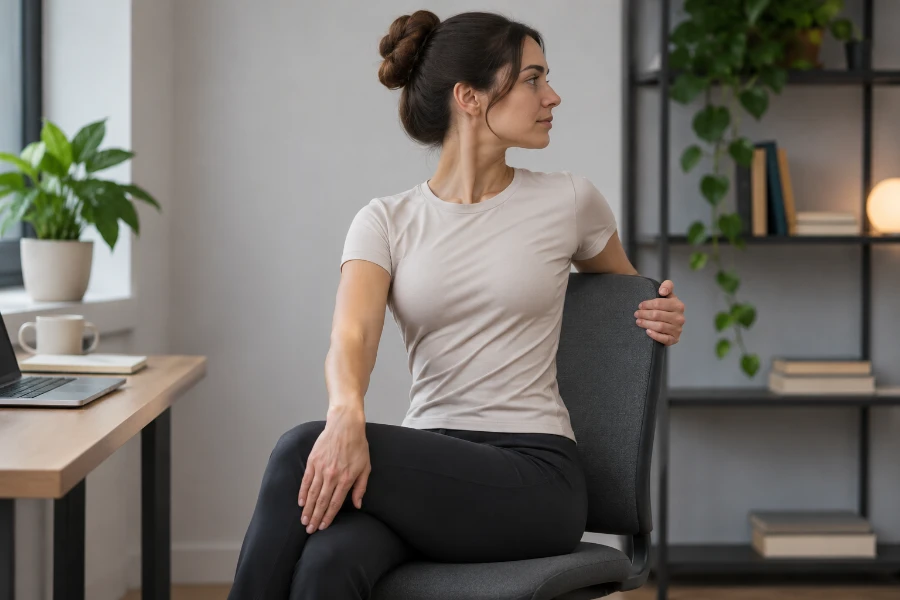
Sit with both feet flat on the floor. Slowly rotate your upper body to one side while keeping your hips facing forward.
Hold for 15 seconds and switch sides. Move within a comfortable range without forcing the twist.
4. Seated Leg Extensions
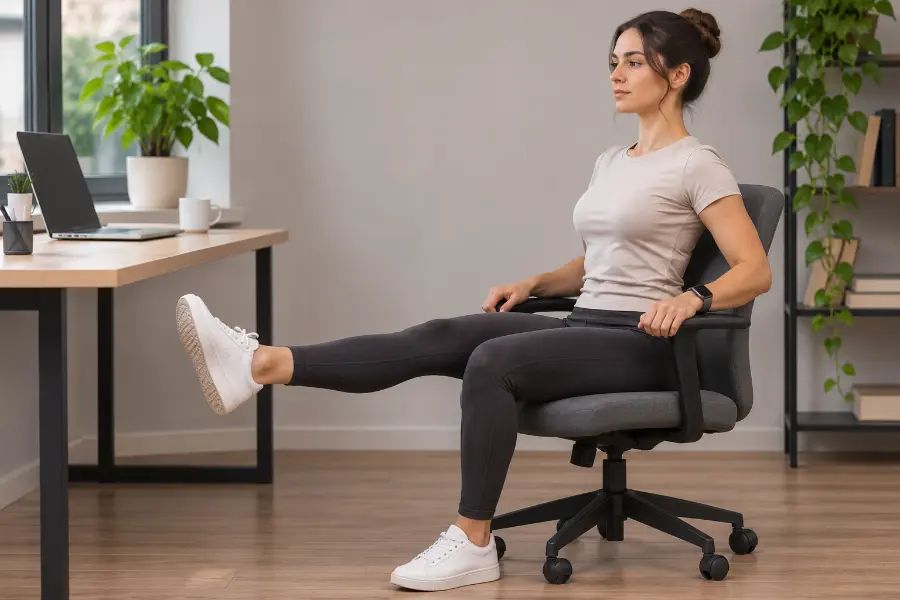
Desk leg exercises are particularly convenient when you can’t leave your workstation.
Straighten one leg in front of you, pause briefly and slowly lower it. Complete 10 repetitions per leg to engage your thigh muscles.
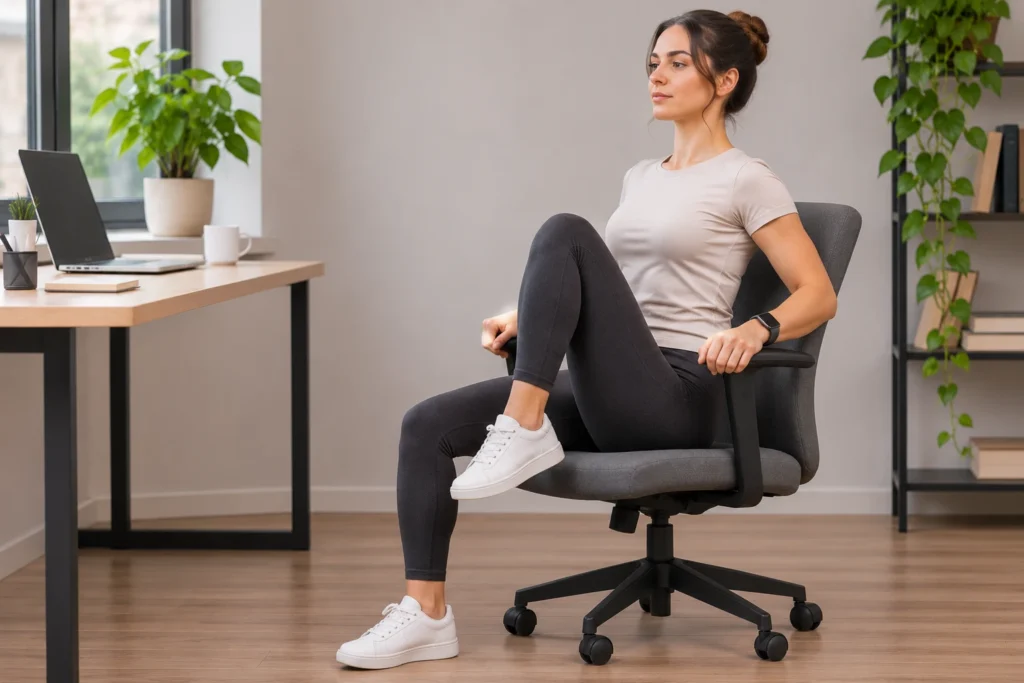
5. Seated Knee Raises
Sit upright with your feet on the floor. Lift one knee toward your chest without leaning backward, then lower it slowly.
Repeat 10 times on each side, keeping your abdominal muscles gently engaged.
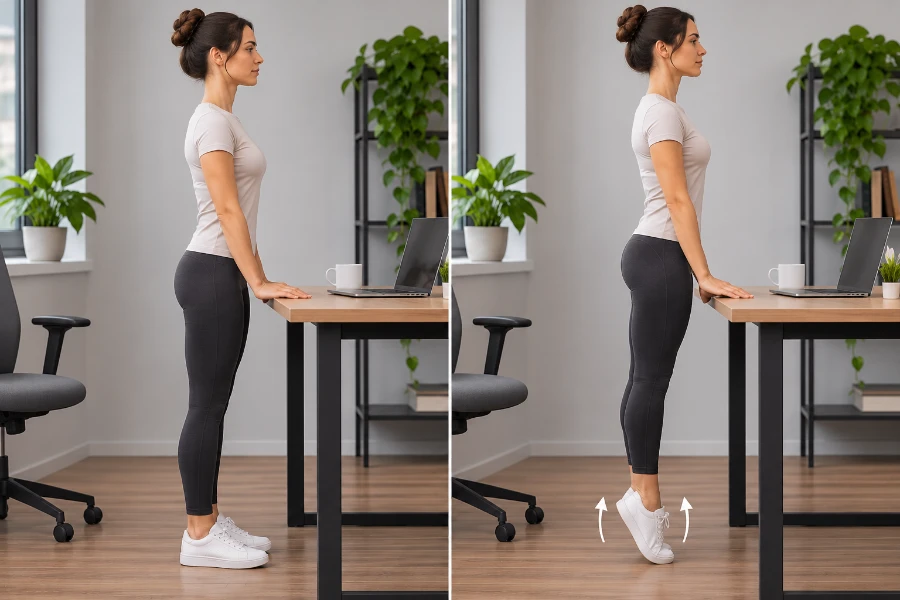
6. Standing Calf Raises
Stand beside your desk and use it for balance. Slowly rise onto the balls of your feet, pause and lower your heels.
Perform 15 repetitions to engage your calf muscles.
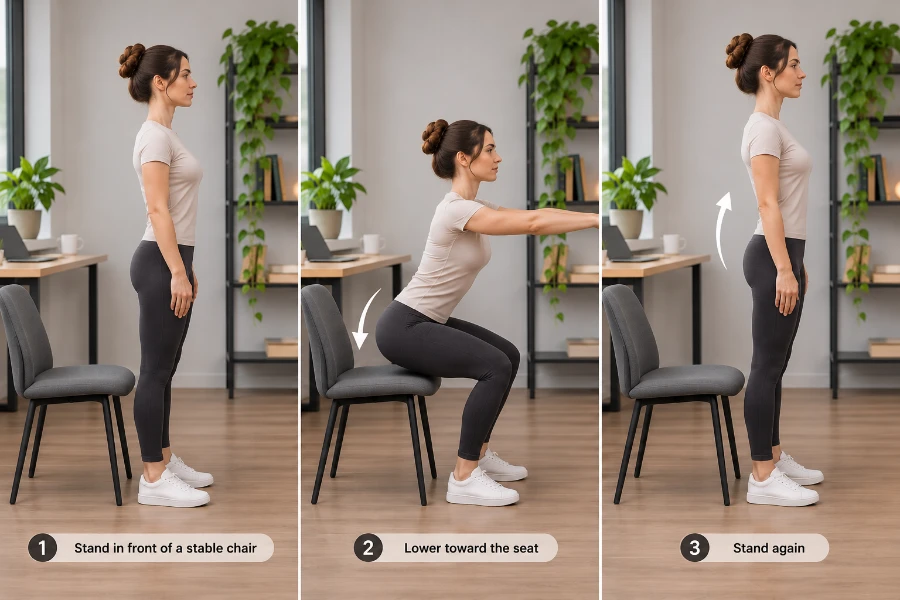
7. Chair Squats
Chair squats offer a more challenging alternative to seated exercises by working your thighs and glutes.
Stand in front of a stable, non-wheeled chair with your feet shoulder-width apart. Push your hips backward, lower yourself toward the seat and stand again.
Aim for 10–15 repetitions.
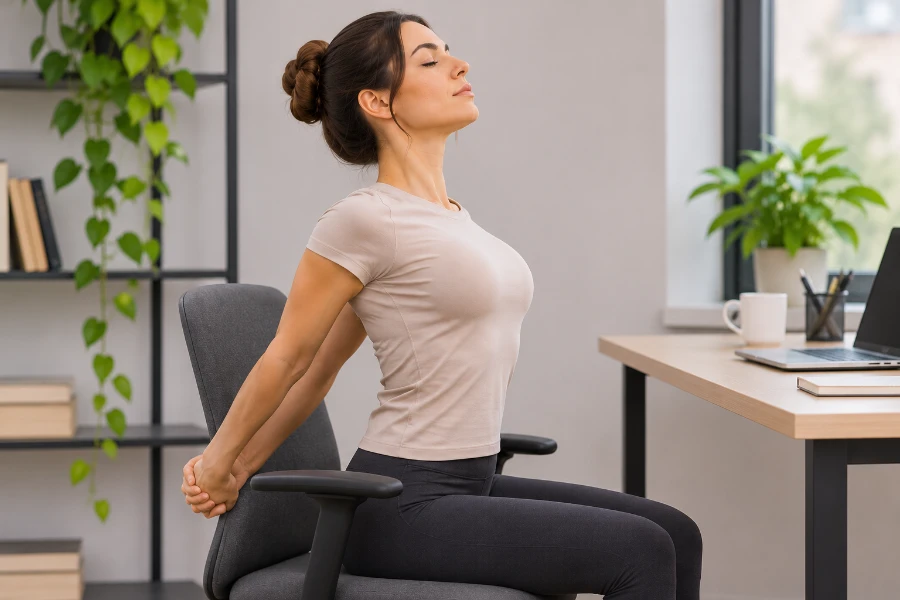
8. Stretching Out Your Torso
Clasp hands behind your back. Push the chest outward, and raise your chin. Hold the pose for 10 to 30 seconds.
Complete 3-4 repetitions to work your chest, shoulders and arms.
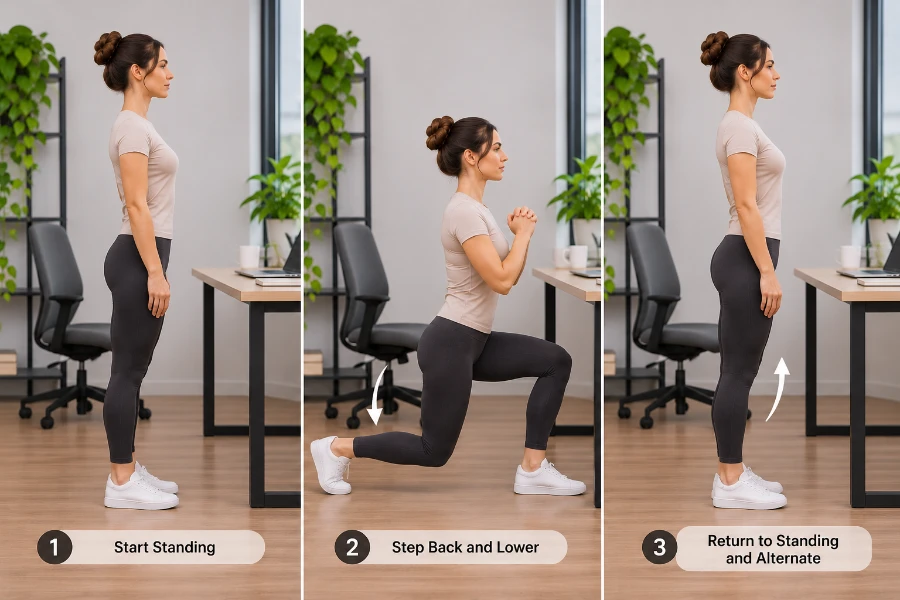
9. Standing Reverse Lunges
Step backward with one foot and gently bend both knees. Return to standing and alternate legs.
Start with five repetitions per side. Hold a stable surface for balance if necessary.
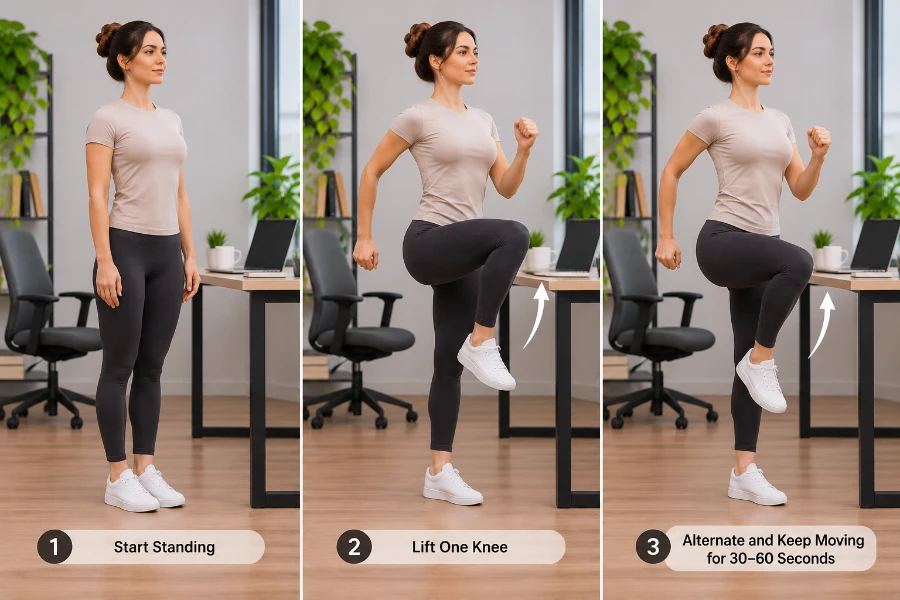
10. Standing Marches
Stand upright and alternately lift your knees while naturally swinging your arms.
Continue for 30–60 seconds. It’s a convenient way to add movement between meetings without needing much space.
How to Get More Exercise While Working at a Desk
Instead of treating exercise as another task on your to-do list, connect movement with habits you already have.
- Morning: Stretch your neck and shoulders before opening your emails.
- Mid-morning: Perform seated leg exercises.
- Before lunch: Try chair squats and desk push-ups.
- Afternoon: Combine standing marches with gentle stress relief exercises and slow breathing.
Do Desk Workouts Really Work?
Yes, desk workouts can help reduce inactivity, ease stiffness and engage muscles that remain relatively inactive while sitting.
Strength-based movements such as squats and push-ups offer more muscular challenge than gentle stretching alone. However, desk workouts should complement regular walking, cardiovascular exercise and strength training rather than replace them.
Frequently Asked Questions
How often should I exercise at my desk?
Try breaking up sitting every 30 minutes when practical. Alternate short walks, standing breaks and gentle exercises throughout the day.
Can I exercise at my desk without standing up?
Yes. Seated leg extensions, knee raises, spinal twists and shoulder blade squeezes are convenient options, especially in shared workspaces.
How long should a desk workout last?
A five-minute session is a manageable starting point. Choose three or four exercises and gradually increase your activity as your comfort and fitness improve.
Small Movements, Healthier Workdays
Staying active while working doesn’t have to mean rearranging your entire schedule. Start with a few desk exercises you enjoy, build them into your daily habits and gradually introduce more movement.
Your working day doesn’t have to be completely sedentary simply because your job involves a computer.